








How to Set Up Your 2027 Planner: A Step-by-Step Guide to an Intentional Year
The most wonderful time of the year? Planner season, obviously. And setting it up is downright sacred.
Welcome to your planner setup guide.
This guide will walk you through the Sprouted Planner setup specifically, although - I would argue the same principles can be applied to any planner you have.
The principles being this: identify what matters the most, make intentions around those things, map out some big picture plans/intentions, and then fill in what you already know.
Let me be clear, though. Setting up your planner is NOT about filling in every blank space. NUH UH. It’s about deciding what deserves space in your life.
With that in mind, let’s get into it.

Before You Set Up Your Planner: Make Time for the Process
Treat this process like the special time it is.
Note: Only if you’re able to. I remember being in the weeds with littles during the pandemic…there was no sacred setup time during those couple of years. And that’s okay - I now have more freedom to do it. Live in your season.
When should you set up your planner? There is no “right time” for every person - only preferences and convenience. As I’m writing this in November, plenty of people already have their planner setup, or have at least started. Others, like myself in previous years, wait until the last week of December to get theirs set up. And still others are well into January before they finish the set up.
There’s not a right time for setting up your planner, but I’d argue there is a right mood when setting up your planner. You need to create or go to an environment that makes you excited to plan. Your go-to comfy chair, a coffee shop, some music playing, a great drink is a must! Your favorite planning supplies by your side. You get the picture.

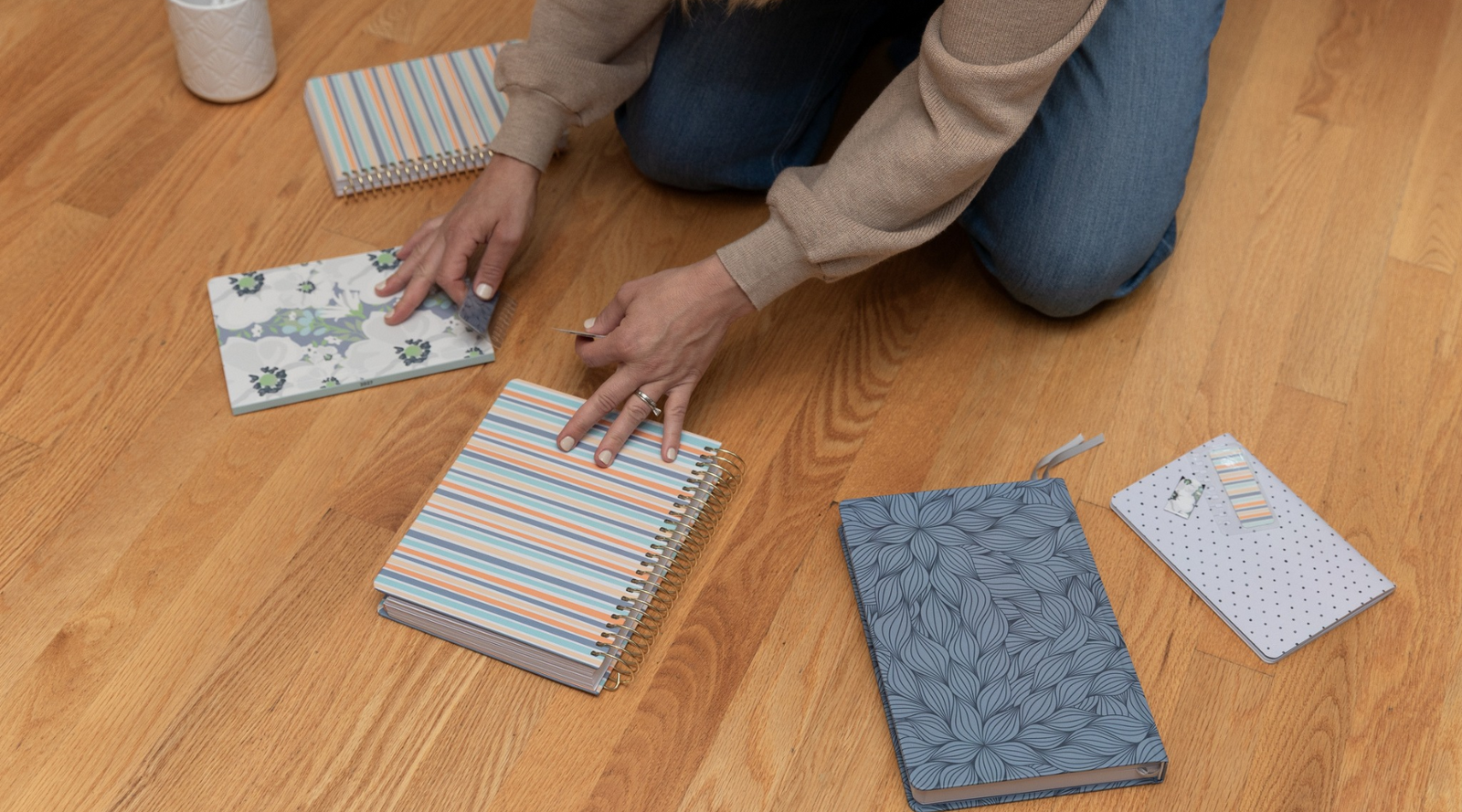
Speaking of planner supplies, these are the helpful tools to gather before your planner setup sesh:
-
Your new planner
-
Your old planner
-
Favorite pen(s) and pencils
-
List of important dates (like a perpetual calendar)
-
White out
-
Color coders: highlighters (my fav: Mildliners or Frixion highlighters) and/or Dot Markers
-
Decorating things: stickers, washi, stencils
Honestly, you really just need your planners and a writing tool to be effective at setting up your planner.But the others I listed do add some fun and flair, if you’re into that sort of thing.
Lastly, be sure to plan time to reflect. Even if you don’t do your marathon yearly reflection until the true end of year (or even into January), you can still do a mini one, which will serve you in your planning for the year ahead. The goal here is to look back at the previous year before rushing into the next one.
We’ve got the when and where down - check - let’s now get into the meat and potatoes: how to set up a planner. Let’s break this down into steps, because everyone loves a good list.
Step 1 – Identify Your Core Values and Set Intentions for 2027
Hot take: start with values instead of goals. Here’s why. Your values are the things that matter most to you. They are your operating system and how you spend the majority of your time should flow out of these core values.
From values should come intentions, and from your intentions should come goals.
Values > Intentions > Goals.
How to Identify Your Core Values
How do you identify your core values? In Sprouted Planners, I have a few pages devoted to figuring this out. There’s also a YouTube video (along with free printable worksheets) where I walk you through this. You can find that here.

Essentially, I think the best way to find your core values is to:
-
brain dump your own list, then
-
review a list of values from people who are expert-like in this area (like James Clear), then
-
Marry the list together (like with like), and finally
-
Narrow it down to your top 5 core values (during this particular season of life)
And like James Clear says, “if everything is a core value, then nothing is really a priority.” Which is why we need to get crystal clear of what TRULY matters to us.
If everything is a core value, then nothing is really a priority. - James Clear
Turn Your Core Values Into Intentions
Next, we turn these core values into actionable intentions. Or values based intentions.That’s fancy talk for simplydeciding how we want to live out our values.
Reminder: intentions are actions we’ve decided to take in advance. Thinking about criminal cases always helps me with remembering what intentions are (is that creepy?): did the criminal go to the victim’s house with the plan [the intention] to commit the crime, or did it just happen in a fit of rage? Our intentions are actions we plan in advance.
With your core values, decide 2-3 actions you’ll take [on a regular basis] to live out that value. Do this with all five of your core values.
In my own life, I have HEALTH as one of my core values. These are the 4 intentions I have in order to prove that my health is important to me:
-
Eating: 90/10 rule: make the 10% worth it (this includes alcohol)
-
Sleep - my super power. Prioritize this.
-
Move - add way more mobility this year.
-
Laugh and smile - soul medicine. Delight in all I have.

What About Goals?
Now we move onto goals, if that’s what you want to do. (personally, I don’t really make goals but that’s a personal preference). What’s the difference between intentions and goals? Intentions are that inward, guiding principle of living out matters to you. Goals are these outward, measurable actions that can be obtained and tracked.
Setting goals that flow out of your intentions (that are based off your values) is a fantastic start! It’s already answering the WHY behind the goal, which is what many goals lack. Using our HEALTH example, let’s look at possible goals I could make from my intentions.
Value: Health
Intention: Eating with the 90/10 rule.
Goal: Plan lunch and dinner every week.
Intention: Sleep as a superpower.
Goal: Get 7-8 hours of sleep every night.
Intention: Move + add more mobility.
Goal: Strength train 3x/week, and mobility 4x/week.
Notice how all the goals can be measured and accomplished?
I do not typically set goals. I may have mini ones here and there but I never make a goal list for the year. This is because I subscribe more to the mindset of SYSTEMS vs GOALS. A system puts all these goals and intentions on autopilot. Systems are simply built out of routines and habits.
Instead of figuring out when to work out or do mobility everyday, it’s already built into my morning routine: wake-up, drink water, pour cup of coffee, read my bible, pray, plan, work out, start kid’s breakfast. I also follow someone who puts out a weekly workout plan that I can do right in my home, so I simply have to press play on YouTube (shout out to Nourish Move Love!).
As for my sleep, I aim to be in bed by 9pm every night and wake up at 4am. It’s more flexible on the weekends, which allows me to be more strict during the week days.
On Thursdays, plan my meals for the week ahead (at least the dinners) and put together my grocery list. On Fridays, I do the grocery shopping and Target run so I have everything I need to follow my plan in the week ahead. If it gets off course one night? Who cares. We don’t have to be perfect.
I’m not telling you to ditch your goals. I’m trying to show you that you don’t have to be a goal setter to have a meaningful year. Intentional living is all about identifying what matters, deciding how you want to live that out, and then systematize it as best you can.
Step 2 – Make Time for the People Who Matter Most
In Sprouted Planners (Daily, Weekly, and Hourly Planners), there is a two-page spread devoted to your people. This is part of what makes Sprouted unique - an emphasis on your people. This is because we are hard-wired to be in connection with people. And since life gets so full and busy, it can be easy to let these relationships fall through the cracks.
The target is not perfection here. We are simply naming the people that matter most to us, and thinking about how we can best stay connected to them. That’s how we have intentional relationships.
I have always loved the concept of a home team since I heard about it from Shauna Niequest. Your home team is the group of people - family, friends, neighbors, coworkers - that make up your inner circle of people that are most important to you during this particular season. They are the people you can depend on when you’re in a bind or crisis, and the ones you want to share important news with (before they hear it from someone else). I’d argue, they are the people you should invest the majority of your [people] time into.
Then I heard Greg McKeown talk about the scales of importance in your relationships, and that made quite the impression as well. He argues that all relationships are not equal, and we should pay time and attention according to the scale of importance they are. If you have a spouse and kids, they are most likely going to be your 1000x people. When things are wrong with these relationships, your whole life is affected. Naturally, we do (and should) have great intention and time into these relationships.
Your 10x relationships are the next tier, and probably make up other members of your family, and closest friends. These are all worthy relationships and deserve love and attention.
Your 1x people are those who are in your orbit and matter to you, but they may be seasonal or not the highest priority at this point. But they’re still important to you, and you want to keep in touch with them.
I married these two concepts together, and I’d argue that your 1000x and 10x people comprise your home team. These are the people who get the vast majority of your time and attention.
In your Sprouted Planner, there is a table where you can list your people,and identify what level they are. Underneath their name, you’ll decide how and how often you want to invest in each relationship. These are your people intentions. Your relationship goals, have you.

In each monthly calendar, there is a small checkbox with reminders to review your intentions and schedule them in.
Step 3 – Write Down Your Hopes for the Year Ahead
We all go into the new year with hopes of what’s ahead. How often do you hear someone say something like, “I can’t wait to say goodbye to [current year] and start fresh with [new year].” There’s hope contained in that sentiment. Tease it out and write it down.
This is simply a journal prompt where you can brain dump whatever is on your mind.What are your hopes for the new year? Allow yourself to dream a little hear. Who care if it’s a little pollyanna. Write it all down without editing yourself.
There’s a space for this in Sprouted Planners. I include a list of life areas you could write your hopes about, but you don’t have to. You can brain dump all over the place, or you could write down your hopes in the areas of: health (physical and emotional), relationships, faith, career, finances, growth, joy, social, purpose & legacy, home, and community.
Once you write down your hopes for the year ahead, you can leave it be, or you can mine it for gold. No wrong actions here. If you mine it for gold, I’d do this:
-
Are you hopes aligned with your values? If not, do you values need to change or do you need to adjust your hopes?
-
What hopes could turn into intentions, goals, or systems?
If you allow me to get personal for a moment, here is what I wrote down for my 2026 Hopes for the Year:

It’s here that we recognize that we can hope and plan for the future without controlling it. We can hope big, control what we can, and have faith that we are capable of handling whatever comes our way.
Step 4 – Map Out Your Year at a Glance
The first three steps are the heaviest lift of our entire planning experience. It’s important work but man, we may need a nap afterwards. Now we get to have some planning fun. It’s the big picture views of our yearly planning.
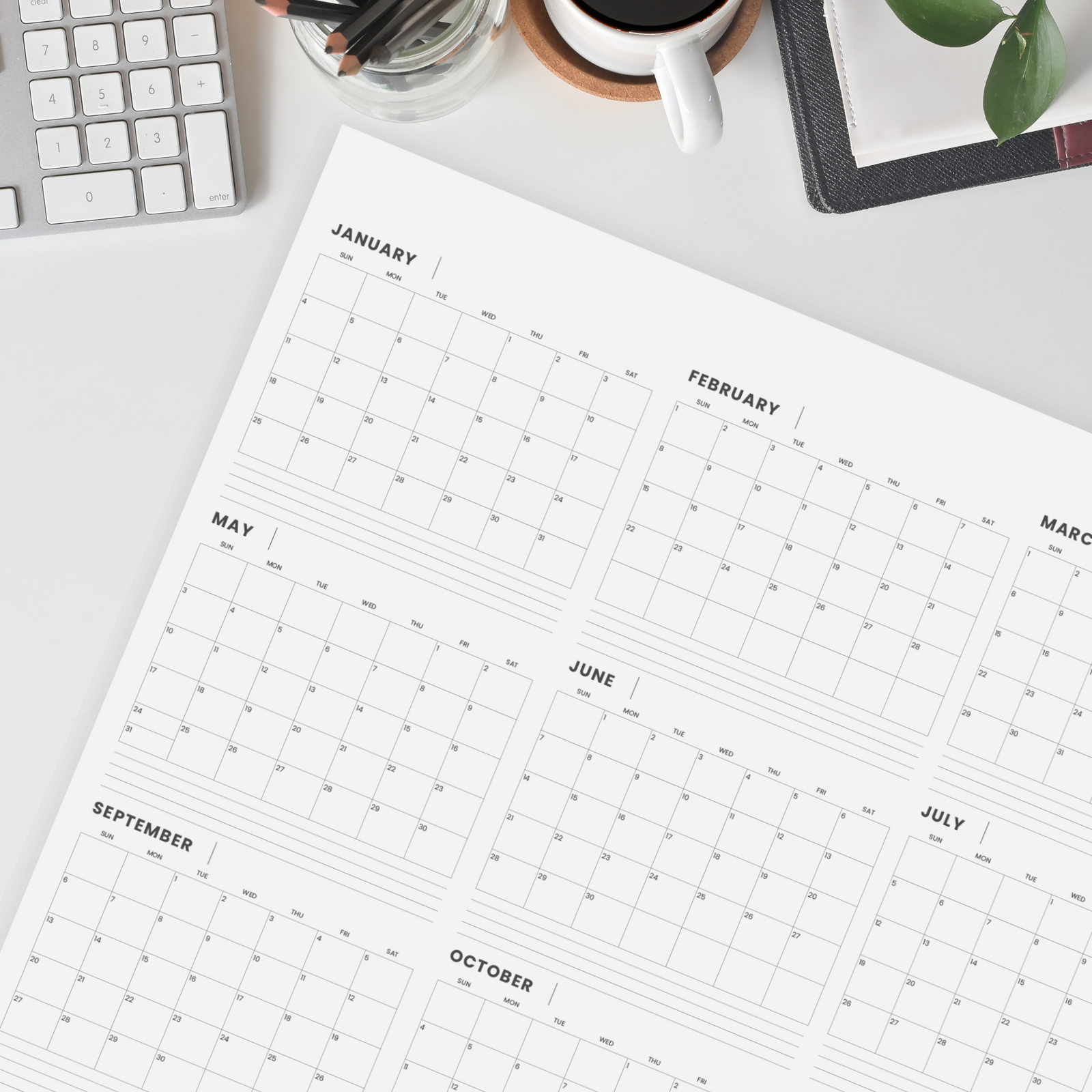
This starts with our year at a glance. Every planner holds a year at a glance: little monthly calendars from January - December. It’s your annual calendar. It’s a little place to help you organize your year, and think in the big picture.
Sprouted Planner is no exception. Under our little months are two lines, which allow you to plan themes for the month.Or maybe it’s projects you want/need to tackle each month.
You can whip out your highlighters at this point and highlight dates that may serve you:
-
The school year
-
Work/on call schedule
-
Vacations or travel
If you do this, remember to include a little key for your color codes.
The opposite page holds the [not by any means all inclusive list] holidays and observations. You can reference that as you work on your year at a glance. OR, do exactly nothing with this page, which is also a great option.
As for me, I use the lines underneath to write out themes I anticipate for the months.

Step 5 – Create Your 2027 Year List
Keeping with the theme of looking ahead to the big picture, we come to our Year List. You can think of the Year List like a yearly bucket list.
A year goes by faster than we think. Like, really fast. The days may go slow but the year flies by. We get lost in the day-to-day and pretty soon, the year is over. This Year List allow you to think about things to do in 2027. More than things to do, it’s a list of things you want to accomplish, experience, start, finish, try, change, learn, and/or feel in the year ahead.
Maybe its places you want to visit. Habits you want to establish. Things you want to stop doing.
This isn’t a list of obligations. It’s a list of things to help you really live your year ahead. To make you feel alive, accomplished, joyful, and satisfied.
I haven’t created my 2027 bucket list yet, but on my 2026 year list, I only wrote down 6 things, and truthfully, I’ve only completed one of them (and that’s OK). This isn’t a list to feel bad about yourself if you haven’t crossed them off. It’s just a reminder of what you personally would like to have done, experienced, or felt at the end of the year.
Also a worthy practice (that sits opposite of the Year List in Sprouted Planner) is to Reflect Forward and identify what you want less and more of in 2027. There’s a little section below that for notes and themes you notice in your lists.

This Reflecting Forward (along with your Hopes for the Year) can serve as ideas for your Year List as well.
Step 6 – Plan Ahead for the Seasons of Your Life
We move from the big picture to breaking things down a little more. We can look at the year in both seasons or quarters, and then monthly.
This can be a pre-game before things actually hit your monthly calendars. This is what the PREVIEWS section inside Sprouted Planner is for. On its two-page spread are two different tables: an unlabeled quartet, and the 12 labeled months.
On the quartet page, since it's blank, you can use this however you please. It can be a seasonal bucket list (which is what I use it for), or a quarterly breakdown. You might put goals here, or 4 big projects you’re going to tackle.
The list of months comes in clutch to plan things in advance before they hit your calendar. For me, I list things I need to do that month in order to stay ahead of things. For example, in January I have the following tasks:
-
Check registration dates (summer camps + camping)
-
School gala sponsorship
-
Order valentines
-
Plane spring break
-
Plan [my daughter’s] birthday
-
Send Sprouted Planner survey
February is a busy month and season for us, so getting ahead of these things in January allow the next month to go more smoothly.
This section is also included on the monthly calendar checklist, so you can check it every time you plan your month.
Remember to plan fun things as well. Life isn’t meant to be one big to-do list. Include joyful and fun things. This is why I do the season bucket list.
Step 7 – Set Up Your Planner Calendar With Important Dates
We’re going to take a quick break from thinking, and fill out our monthly calendars with the things we know:
-
Birthdays
-
Anniversaries
-
Vacations
-
Days off (including school schedules, if kids)
-
Appointments
-
On-call dates
If you are still flipping through your old planner for birthdays and anniversaries, now’s the time to grab the free perpetual planner printable. You can get that here.

Another idea: turn a mini notebook into a perpetual planner. Label the top of the page with the month (skip every other page to give yourself more space). Number down the page (again skipping lines) for the days of the month. Voila, DIY perpetual planner.
You can find mini notebooks here.
Next, for birthdays/anniversaries only, I highly suggest giving your brain a shortcut and writing them in the same spot within the day (like the very bottom row of the box). This quickly helps you identify what is a birthday vs an appointment.
Of course, you can color-code everything to your heart's content. What do I do? Thanks for asking. Every appointment or task used to have its own color, but now every month has its own color. Deep blue for January, Dark pink for February, etc. All my appointments, meetings, etc gets that color dot in front of it with the thing simply written in black in. For birthdays and anniversaries, I draw a little asterisk on the very bottom line (in the same color as that month’s theme) and write who’s birthday it is. In this season of my life, the uniformness of the color makes my brain feel better. But you do whatever works for you!
Your planner calendar setup is a helpful step for your future self.
Step 8 – Make Your Planner Work for You
We've done the big-picture thinking, mapped out the year, and filled in the dates we already know. Now it's time to make this planner your own.
Because here's the thing:your planner should work for YOU. Not the other way around.
There is no one-size-fits-all approach to planning. We have different lives, different responsibilities, different priorities, and different ways our brains work. What works beautifully for me may be completely unnecessary for you. And that's okay!
This is where I like to take a look at the extra space in my planner and think about what would actually be helpful to have at my fingertips throughout the year.
At the end of your prep pages in the Sprouted Planners is a Yearly Tracker, 2 dot-grid pages, and 2-lined pages. Throughout the planner are more dot grid and lined pages, along with lined pages in the back of your planners.

A few ideas for these pages:
-
Lists: Books to read, restaurants to try, gift ideas, home projects, things to buy, or anything else you find yourself repeatedly trying to remember.
-
Trackers: Habits you're working on, health-related metrics, workouts, meals, or anything you'd like to keep an eye on throughout the year.
-
Reference information: Important phone numbers, measurements, family information, or other details you find yourself needing regularly.
-
Routines: Morning routines, evening routines, weekly rhythms, or household routines that help your life run more smoothly.
-
Notes: Brain dumps, ideas, meeting notes, or just a place to get things out of your head.
Think about the things you reach for your phone to look up, the lists you keep rewriting, or the information you wish you had in one convenient place. Those are good candidates for your planner.
And don't feel like you need to fill every extra page right now. You can leave space blank and decide what you need as the year unfolds. In fact, I'd encourage that!
I also wouldn't go overboard with the trackers and lists. It's easy to get caught up in all the fun possibilities of a fresh planner and create an elaborate system that becomes one more thing to maintain. Ask yourself whether something will genuinely serve you. If it won't, skip it.
The goal is to create a planner that makes your life easier, keeps what matters in front of you, and helps you be intentional with your time.
And now? You're ready!
Your 2027 Planner Is Ready. Now Go Live Your Life.
Look at you! You've identified your core values, made intentions around the people who matter most, dreamed about the year ahead, mapped out your big-picture plans, and filled in the dates you already know.

That's a lot of thoughtful work. And hopefully, a little fun along the way.
But I want to leave you with one final reminder:your planner is a tool, not a contract.
You are allowed to change your mind. Your priorities may shift. Your circumstances may look completely different six months from now. Some of the things you wrote down will happen, and others won't. You may have a season where your planner is your constant companion, and another where you barely open it.
That's life.
Don't let the pursuit of a perfectly planned year get in the way of actually living it. The point of all this work is not to have a beautiful planner with every box filled in and every goal accomplished. It's to create a little more awareness around how you're spending your time and whether that time is reflecting what matters most to you.
Come back to your values throughout the year. Revisit your intentions. Adjust your plans when you need to. And remember that you don't have to do everything to have a meaningful year.
This is what the little monthly checklist is for in each monthly calendar. All this work isn’t a set-it-and-forget-it situation. It’s not a crockpot.

If you take nothing else away from this guide, I hope it's this:be intentional about what gets your time, attention, and energy.Those are some of your most precious resources. Spend them wisely, but also leave room for spontaneity, delight, and all the unexpected goodness that life brings.
Here's to a wonderful 2027. I hope it's a year filled with the people you love, the things that bring you joy, and plenty of moments that make you stop and think, "This is exactly where I'm supposed to be."
Happy planning, friends!
Frequently Asked Questions About Setting Up a Planner
When should I set up my planner for 2027?
There really isn't a right or wrong time! Some people love setting up their planner in November or December, while others prefer to wait until the very end of the year or even January. My advice? Set aside time when you can enjoy the process rather than rush through it. And remember, you don't have to finish everything in one sitting.
What do I need to set up a new planner?
At a minimum, you'll need your new planner, your old planner (if you have one), and a favorite pen. I also like having a list of important dates, highlighters or colored markers, whiteout, and a few fun decorating supplies like stickers and washi tape. But don't let a lack of supplies stop you. You really can set up a planner with just a pen!
What should I put in my planner at the beginning of the year?
Start with the big picture before jumping into the daily details. I recommend identifying your core values, creating intentions around those values, thinking about your hopes for the year, and making a list of things you'd like to experience or accomplish. Then map out the year ahead and fill in the important dates you already know, like birthdays, anniversaries, vacations, appointments, and school schedules.
How do I organize my planner for the year?
I like to organize my planner in layers. First, identify what matters most to you. Next, make intentions around those things and think through your bigger plans for the year. Then break those plans down by season and month. Finally, fill in your calendar with the dates and commitments you already know. This approach helps you connect your everyday schedule to the bigger picture of how you want to live.
Do I need to set goals when setting up my planner?
Nope! Goals are great, but they aren't a requirement for intentional living. I personally focus more on values, intentions, and systems than traditional annual goals. Your values identify what matters, your intentions determine how you'll live those values out, and your systems help make those actions part of your everyday life. If goals are motivating for you, by all means, include them!
Can I use these planner setup tips with any planner?
Absolutely! While this guide walks through setting up a Sprouted Planner, the underlying principles can be applied to just about any planner, notebook, or planning system. Identify what matters most, make intentions around those things, map out your big-picture plans, and fill in what you already know. The specific pages or layouts may look different, but the process is the same.